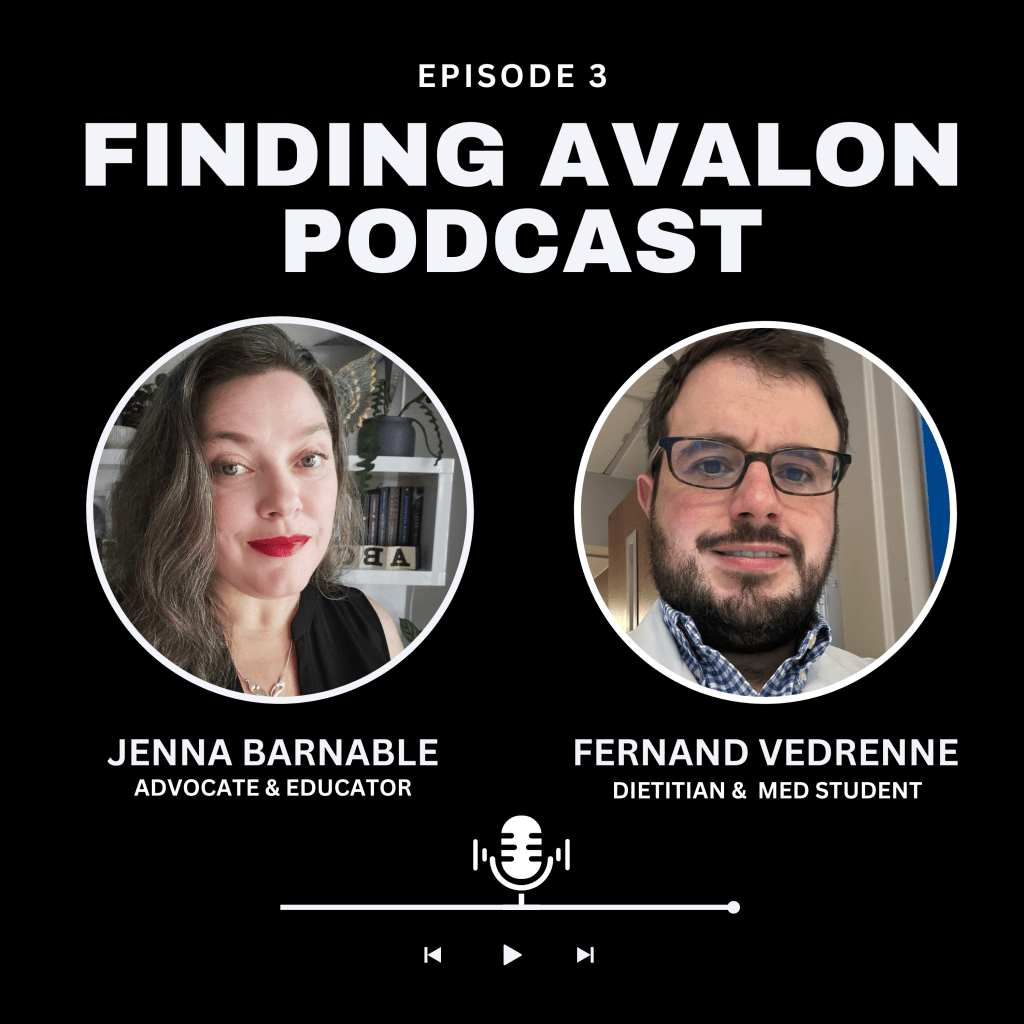
Fernand Vedrenne of Mexico City is a dietitian and medical school student who brought the Finding Avalon Podcast a wealth of experience and insight on the themes of fatphobia and ableism in healthcare.
Listen to his story, as he trains to be a doctor driven by compassion for his patients and determined to thrive as a person and professional with ADHD.
“Being fat is not a choice. Stigma in medical practice shouldn’t exist.
Fernand Vedrenne
You are ethically obligated to help anyone, without bias.”
About this Episode
Episode Title: Ableism and Fatphobia: Barriers in Healthcare with Fernand Vedrenne (S1E3)
Episode Summary: In this episode of the Finding Avalon podcast, host Jenna Barnable engages in a deep conversation with healthcare professional Fernand Vedrenne about the complexities of disability representation, particularly focusing on fatphobia and ableism in healthcare settings.
They share personal experiences and insights on the stigma surrounding weight, the impact of ADHD on his medical training, and the importance of providing dignified care to patients. The discussion highlights the barriers faced by individuals with disabilities and the need for systemic change in healthcare practices to ensure equitable treatment for all.
Jenna and Fernand discuss the pervasive issues of fatphobia and weight stigma in the healthcare system. They explore personal experiences with discrimination, the ethical obligations of healthcare professionals, and the impact of medication on weight. The conversation highlights the need for authentic representation of disabled individuals and the importance of addressing biases in medical practice.
The conversation also touches on the accessibility issues in medical training, the gender biases prevalent in the medical field, and the personal challenges of navigating medical school with ADHD. Throughout, the importance of compassionate care and the need for systemic change in healthcare are emphasized.
Also explored are the complexities of neurodivergence, particularly ADHD, and its impact on learning, communication, and patient care in the healthcare setting. They discuss the importance of adapting learning styles, the necessity of double-checking work for patient safety, and the challenges of self-awareness and imposter syndrome faced by healthcare professionals.
This episode’s dialogue closes on the importance of vulnerability, the impact of internalized ableism, and the need for genuine inclusion in society.
Accessibility: All episodes have been uploaded with transcripts, but if you have difficulty with accessibility, Jennifer can send you a copy of the transcript by email if you contact her.
Takeaways from this Episode
- Authentic representation of disabled individuals is crucial in healthcare.
- Fatphobia is a form of weight stigma that exists in healthcare.
- Fatphobia in healthcare leads to poor patient outcomes.
- Weight stigma can prevent patients from receiving proper care.
- Medication can significantly impact weight, often leading to stigma.
- Patients often face dismissal, bias and gaslighting in medical settings.
- Healthcare professionals must prioritize patient dignity and respect.
- Barriers in healthcare systems often stem from ableist attitudes.
- Internalized ableism affects how individuals view their own disabilities.
- Empathy and understanding are essential in patient care.
- Healthcare professionals have an ethical obligation to treat all patients fairly.
- Weight stigma can lead to poor patient outcomes and dismissive care.
- Personal experiences with fatphobia can deeply affect mental health.
- Stereotypes about fat individuals are harmful and unfounded.
- Patients are often aware of their weight and do not need unsolicited advice.
- Inclusive medical practices are essential for effective patient care.
- The intersection of disability and weight stigma complicates healthcare experiences.
- Advocacy for better representation and understanding in healthcare is crucial. Patients often feel dismissed and unheard in healthcare settings.
- Stigma can lead to misdiagnosis, frustration and unnecessary suffering for patients.
- Gender bias in medicine can also create hostile environments for female practitioners.
- Accessibility barriers in medical training can hinder learning and opportunity for disabled medical students.
- The pressures of the healthcare system can lead to burnout among providers.
- ADHD can significantly impact a student’s ability to navigate medical school.
- Listening to patients can lead to better diagnoses and outcomes.
- The healthcare system often prioritizes efficiency over patient care.
- ADHD can complicate the medical trianing experiences, but people are very capable.
- Adapting learning styles is crucial for success.
- Double-checking is essential for patient safety.
- Self-awareness helps in managing inattentiveness.
- Communication is key in healthcare settings. Humility and patience are important in patient interactions.
- Empathy and care are essential in healthcare. Understanding patient trauma is vital for care.
- Disability is often misunderstood and stigmatized. Misconceptions can lead to shame.
- Internalized ableism affects many people; patients and healthcare professionals alike.
- Asking for help is a sign of strength, not weakness. Vulnerability fosters connection and understanding.
Listen to Episode 3 here
Episode 3: Fernand Vedrenne is available on Spotify or wherever you get your podcasts. Thank you for supporting a disabled creator with a follow, share, comment and like!





 Finding Avalon: Storytelling, Advocacy & Life
Leave a comment