“On this episode, host Andrea Gunraj speaks with disability rights advocate Jennifer Barnable on how ableism and gender discrimination create barriers for women and gender-diverse people with disabilities.
The Canadian Women’s Foundation
Jenna shares her lived experience and advocacy for anti-ableist feminism, shedding light on staggering rates of violence, poor health outcomes, and systemic neglect.”
A Meaningful Guest Opportunity
Earlier this year, I was grateful to be an invited guest of the Canadian Women’s Foundation podcast “Alright, Now What?” to talk about how important an anti-ableist, inclusive feminist movement is and the many issues facing disabled, chronically ill and neurodivergent women and gender diverse folks in Canada.
Now the the episode has aired, I’m sharing the links for anyone interested to listen in. I was very appreciative of the accessible, flexible and supportive environment this production offered and am heartened by the featuring of my advocacy and thought leadership on a national platform that I’m so closely aligned with.
About this Episode
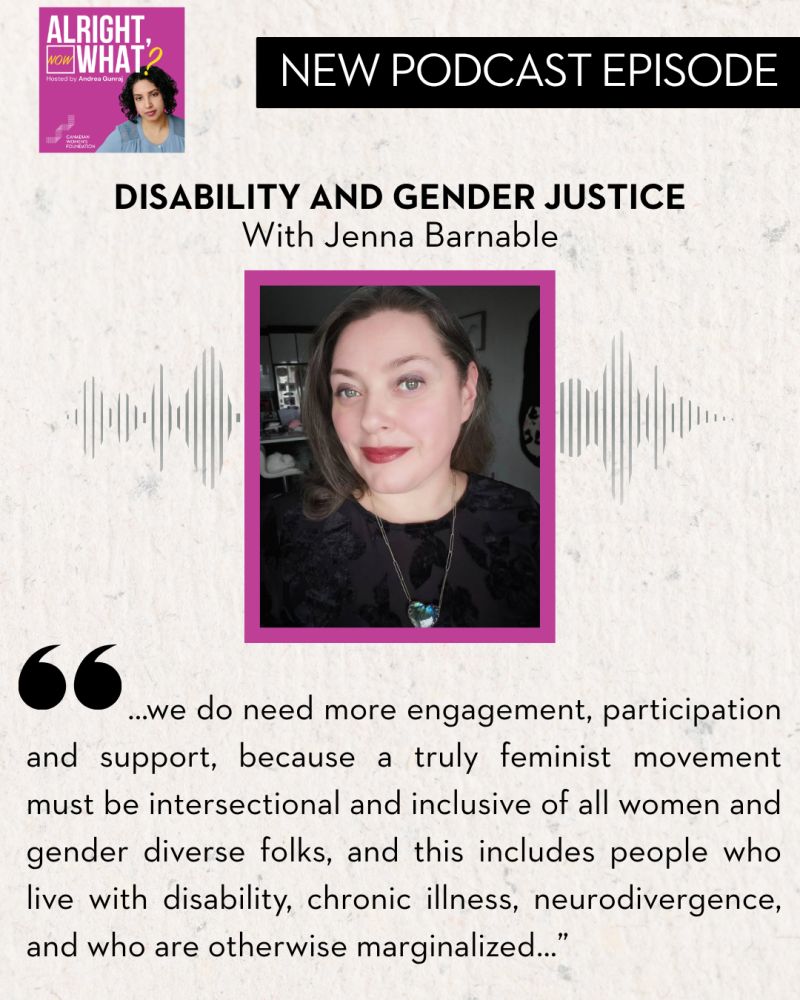
“On this episode, host Andrea Gunraj speaks with disability rights advocate Jennifer Barnable on how ableism and gender discrimination create barriers for women and gender-diverse people with disabilities. Jenna shares her lived experience and advocacy for anti-ableist feminism, shedding light on staggering rates of violence, poor health outcomes, and systemic neglect.”
Takeaways & Transcript Quotes
“Destigmatizing disability and feminism is something that motivates me on a deep level, as a person and as an advocate too. I have lived experience and professional experience in the Disability community and have witnessed the inequity and harm disabled women and gender diverse folks face.
We’re living in a world dominated by oppressive systems – patriarchy, colonialism, capitalism, racism, ableism (otherwise known as disability discrimination) – the list goes on. Being a woman and living with disability in this environment unfortunately increases the adversity and systemic barriers we face. Disabled rights are human rights, and gender equality is woven into this too of course.
“Disability Rights are part of feminism and undeniably connected to gender equality and justice.” -Jenna Barnable
- Disabled women and gender diverse people are three times more likely to experience gender-based violence, especially sexual violence. And for Indigenous people, the risk is exorbitant.
- We’re also twice as likely to experience intimate partner violence because our vulnerabilities are targeted by abusive, controlling predators who are overwhelmingly male – it’s even higher if you’re Indigenous.
- Neurodivergent girls, women and gender diverse folks are also at much elevated risk of sexual abuse, neglect and trauma.
- High-masking autistic women are seven times more likely to die by suicide because of lack of support, understanding and significant barriers to care and accommodations.
- Online bullying, digital hate and stalking compounds this for girls and women, along with other marginalized people, like those who are disabled.
- Disabled women are also more likely to be abused in various ways by family members and caretakers. Many are coerced and controlled, fearful of speaking out and losing care or support.
- In workplaces, disabled women are hired much less, paid less, have less job security, have shorter careers due to barriers to accessibility and career progression, they face increased workplace harassment, including sexual harassment and bullying.
- And finally, gender inequality and ableism gives us this reality: Disabled women face overwhelming barriers in healthcare because of patriarchy and ableism. This can lead to delays in diagnosis, worse health outcomes and unnecessary suffering.
- Social discourse is becoming louder finally – women worldwide are sharing their experiences of feeling dismissed and disrespected by doctors, not having their pain and symptoms taken seriously, while men receive much faster, better and more thorough attention and care.
Learn More
Check out the Canadian Women’s Foundation podcast, courses and other web resources here to find out the amazing things this orgnanization is doing across our country.
For the full transcript of Jenna’s interview, find it here (Season 7, Episode 17; aired June 18, 2025)

 Finding Avalon: Storytelling, Advocacy & Life
Leave a comment