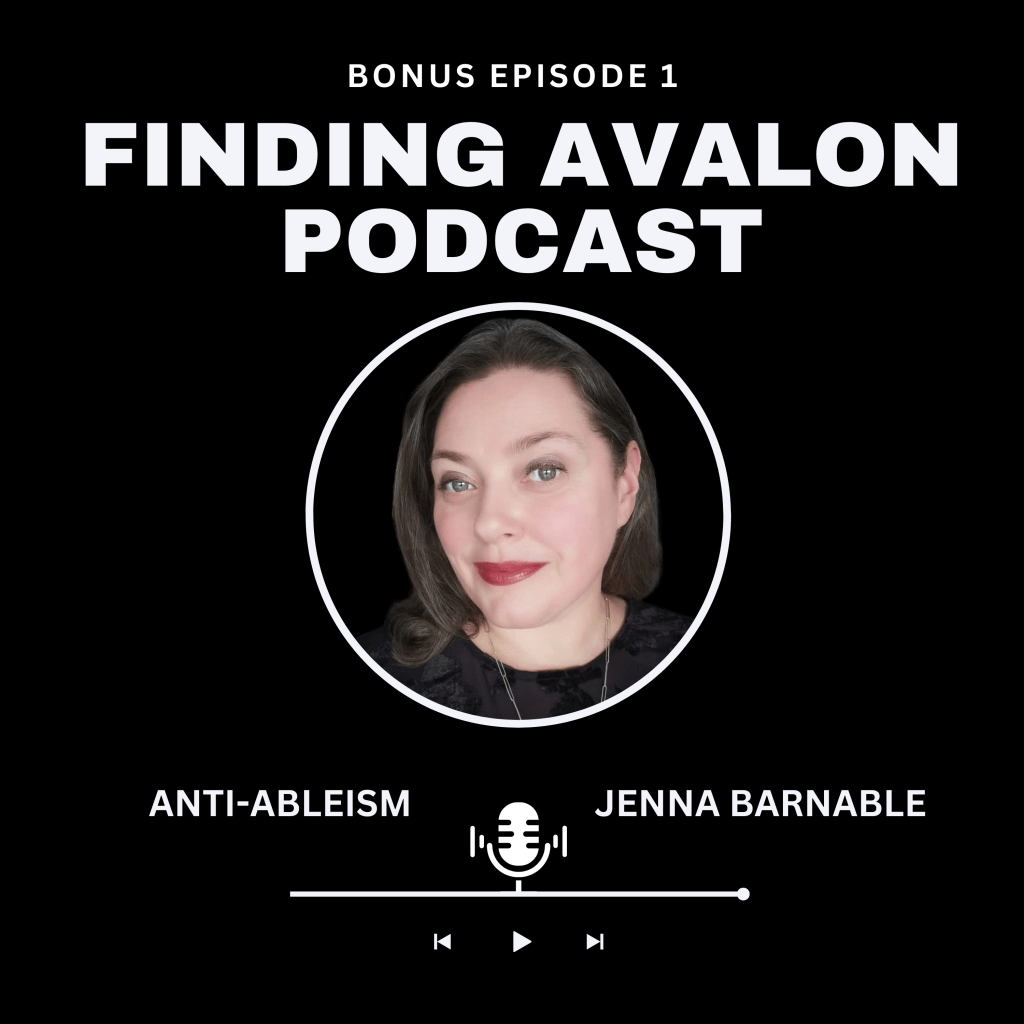
Ableism – and internalized ableism – requires consistent, collective effort from the entire community. Jenna pops in for a quick bonus episode to talk about her 15 year journey with disability, unleaning ableism, and becoming an inclusion advocate and disabled rights activist.
Confronting ableism starts with understanding what disability discrimination it, where it stems from, and how it violates human rights and harms Disabled people through society’s environmental and attitudinal barriers. It also means acknowledging our own biases and unlearning harmful beliefs, replacing them with supportive and dignified acts of allyship.
Disability is a part of the human experience – it should be accepted, expected and planned for. Denial, distancing and judgment is not the answer, despite generations of stigma and marginalization.
This high-level episode hints to future episodes that will more closely examine specific ways people can become actively anti-ableist as allies to the Disability community, and how Disabled, chronically ill and neurodivergent folks can confront internalized ableism, too.
“When disability changed my life, I rapidly began to experience the world through a very different lens.
Jennifer (Jenna) Barnable
I’d always believed inclusion was for everyone. But when I found myself edged out and ‘othered’ more and more, confused at suddenly being on the outside looking in, it felt like a seismic shift, one that wrongly divides people’s worth based on ability and health.
The more disabled I became, the more discrimination I faced… When I understood what was happening and learned more about where this inequality was rooted, there was no question that I would take action
for myself and for others.”
About this Episode
Episode Title: Anti-Ableism and Advocacy: Not a Solo Mission with Jennifer (Jenna) Barnable (S1B1)
Episode Summary: In this episode, Jennifer (Jenna) Barnable shares her personal journey with disability, exploring the profound impact it has had on her life, but more as a result of ableism. She speaks about the complex, systemic environmental and attitudinal barriers she has faced in a society that disables people further with its stigma and inaccessibility.
Jenna discusses the challenges faced by those with non-apparent disabilities, the societal stigma surrounding disability, chronic illness and neurodivergence, and the importance of allyship and community in dismantling ableism (also known as disability discrimination).
Through her experiences, Barnable highlights the need for greater awareness and education around disability and calls for collective action to join together in advocacy to create a more inclusive world for all people, regardless of their abilities or health status.
Chapters include: Pushing Back Against Ableism, The Impact of Ableism; Experiencing Ableism and Discrimination; An Advocate Begins; Understanding Ableism and Its Harmful Effects; No Longer As Welcome; Disability is Human; Discrimination is Disabling; Disability is Diverse; The Call for Community Action Against Ableism
Takeaways
- Disability can completely change one’s perspective on life.
- Disability can be non-apparent and still significantly impact a person’s life.
- Disability is a common human experience that can affect anyone, at any time, in any number of ways.
- Disability should be accepted, expected and planned for
- Humans are not invincible. Anyone can become disabled. We all can get ill, injured or age.
- Discrimination against disabled people is often rooted in ignorance.
- Non-visible disabilities often lead to disbelief and stigma.
- Ableism manifests in societal attitudes, language, media and upholds harmful systemic barriers in all corners of society.
- The wellness and coaching industries can perpetuate harmful ableist attitudes.
- Self-advocacy is crucial for Disabled people.
- Community support is essential to dismantle ableism for a truly inclusive, accessible society.
- Education on ableism is necessary for societal change.
- Inclusion requires active participation from everyone.
- Discrimination is disabling.
- Oppression affects disabled individuals more than their conditions.
- Inaccessibility disables individuals more than their conditions do.
- Real change requires collective action and awareness.
- We must challenge our own biases and assumptions about disability.
- “We are the experts on our own lives and needs.”
- “It takes a whole community to banish ableism.”
Listen to Episode 10 here
Bonus Episode 1: Anti-Ableism and Advocacy – Not a Solo Mission is available wherever you get your podcasts. Thank you for supporting a disabled creator with a follow, share, comment and like!
Learn more
Accessibility: All episodes have been uploaded with transcripts across all platforms. Contact Jennifer if you need another format.

 Finding Avalon: Storytelling, Advocacy & Life
Leave a comment