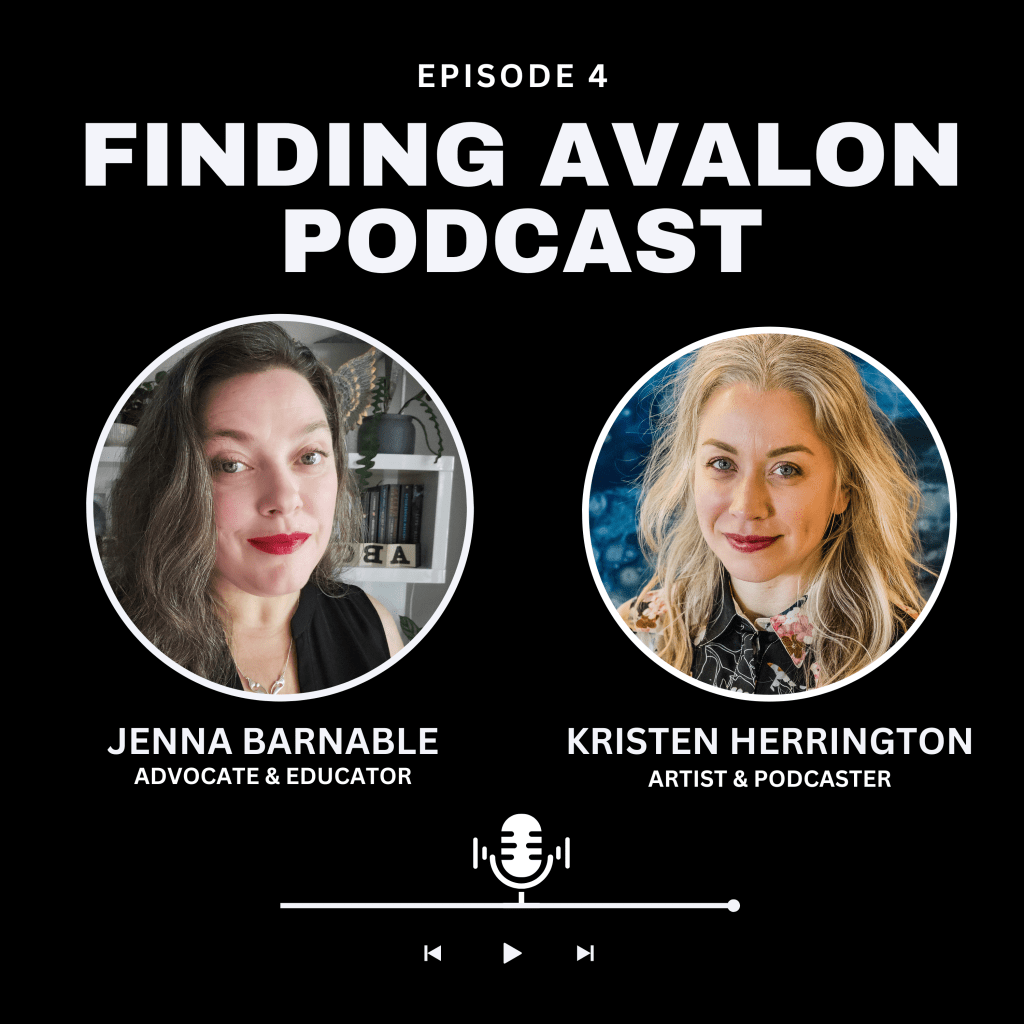
This episode features a cosmic matchmaking of two kindred spirits sharing lived experiences with non-apparent disabilities as young women, a love for the arts, culture and community building, and the good ol’ East Coast comaraderie.
“I think when people consider disability, they imagine it’s something that they can see in others. I would say there’s this misconception that it’s obvious, or known, or something that we can pick up on really quickly. Invisible illness is something that we need to consider when we’re just out interacting with people in the day to day – anybody could have a disability. I would encourage everyone to be compassionate with everyone.”
Kristen Herrington
About this Episode
Episode Title: Disability, Community & Leadership: A Work of Art with Kristen Herrington (S1E4)
Episode Summary: In this episode of the Finding Avalon podcast, host Jenna Barnable speaks with Kristen Herrington, an award-winning multidisciplinary artist and advocate for disability inclusion.
They discuss Kristen’s personal journey with tinnitus and hearing loss, the challenges of navigating life with invisible disabilities, and the importance of self-advocacy. Kristen shares her experiences in creating Togetherland Art Gallery, a community space that promotes accessibility and inclusivity through art.
The conversation also touches on the impact of the pandemic on disability awareness, misconceptions about disabilities, and the role of music and art in fostering connections. Kristen highlights her future projects and the significance of being true to oneself in the journey of advocacy and creativity.
Takeaways from this Episode
- Kristen Herrington is an award-winning multidisciplinary artist and advocate.
- Tinnitus is often misunderstood and can be a challenging experience.
- Invisible disabilities require empathy and understanding from others.
- Self-advocacy is crucial for individuals with disabilities.
- Creating inclusive spaces in the arts can foster community and connection.
- Togetherland Art Gallery is Kristen’s dream job: building inclusive spaces where emerging artists and creative spirits can connect, feel seen, and grow together
- The pandemic has highlighted the importance of accessibility in all areas of life.
- Misconceptions about disabilities can lead to exclusion and misunderstanding.
- Art can be a powerful tool for raising awareness about disabilities.
- Music plays a significant role in personal expression and connection.
- Being true to oneself is essential in both art and the journey of advocacy.
Listen to Episode 4 here
Episode 4: Title wherever you get your podcasts. Thank you for supporting a disabled creator with a follow, share, comment and like!
Learn more
Accessibility: All episodes have been uploaded with transcripts across al platforms. If you have diffciulty or need a different format, contact Jennifer.


 Finding Avalon: Storytelling, Advocacy & Life
Leave a reply to Top 5 Guest Episodes of 2025: Finding Avalon Podast – Jennifer Barnable: Storyteller, Disability Advocate Cancel reply